

Written by

Room to grow

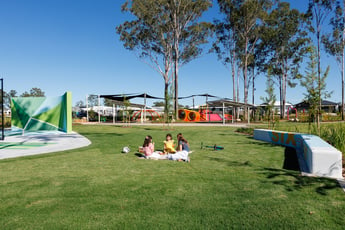
Choosing land in a new Queensland community involves more than finding a homesite at the right price. Location, nearby services, community amenities and plans for later development stages all deserve attention before you decide where to build.
Not every land community offers the same features. Some buyers prioritise school and work journeys; others place more importance on parks, the character of the neighbourhood or a homesite that suits their plans. A useful comparison considers what is available today, what is planned for the future and which location works for your household.
1. Compare location with your everyday routine
Look beyond the suburb name. Test the trips you are likely to make most often, such as your commute to work, the school or childcare run and the drive to your nearest supermarket. Compare routes at the times you would normally travel. Check public transport, walking connections and whether the places you rely on are inside the community or further afield.
Upper Kedron, Burpengary and South Maclean are in different parts of South-East Queensland. Rather than assume one is more convenient, focus on the journeys that matter to your household.
2. Check schools, shops and surrounding services
Compare the schools, childcare, shops, healthcare and recreation options in the surrounding area. Some services may be located within a community, while others require a trip beyond it. Visit the neighbourhood where possible and use current information rather than relying only on the masterplan.
If a particular state school matters to you, check its catchment using the Queensland Government's EdMap school catchment map. Catchments can change, and living nearby does not automatically guarantee enrolment at your preferred school.
3. Look closely at parks and open space
Parks, playgrounds and walking paths may be important to your day-to-day routine. Before comparing them, distinguish amenities that have opened from those planned for later stages. Look at each space in relation to the homesite you are considering, rather than assuming every community includes the same facilities.
At Flourish in South Maclean, Endeavour Park has interactive play equipment, shaded picnic areas and landscaped green space. At Sage in Burpengary, Sage Community Park features a treehouse-inspired playground and areas for active recreation. At Ellendale in Upper Kedron, Ellendale Park has a playground, with walking trails through the community.
These examples illustrate different offerings, not a ranking. If a proposed park is important to you, ask what has been delivered and what remains planned.
4. Understand development stages and future infrastructure
New land communities are usually delivered over multiple stages. Masterplans may show future roads, retail, recreation areas, services or transport connections, but the status and timing of each item can differ. Ask which facilities are operating, under construction, approved or proposed, and who is responsible for delivering them.
Beyond amenities, ask about known utility works, road changes or construction in and around the community or stage. Consider how these could affect nearby streets or access after homes are occupied. Seek current written information where it matters, and remember that indicative timeframes are not guarantees.
5. Consider the streetscape and community design
Where established streets are accessible, drive through the community to see its character firsthand. Look at the mix of home designs, street layout, walking connections and shared spaces. This can help you understand the look and feel of the neighbourhood beyond photographs and masterplans.
Ask about relevant home design requirements and the different responsibilities of the land developer and your chosen builder. Completed projects and the quality of purchaser communication can also help you assess a developer. If community events or resident programs appeal to you, check whether they are current and ongoing. Where available, published resident stories offer another perspective on community life.
6. Choose a homesite that suits your home
Before choosing a homesite, compare its dimensions, shape, orientation, levels and applicable design requirements. These can affect the floor plan, garage and outdoor areas you can accommodate. Your builder can help assess options, site works and any design constraints.
Look at what is directly outside the homesite as well. Ask about the intended driveway location, footpaths, street trees and service infrastructure, and whether any of these could affect access or your preferred design. Request current lot information, the relevant plan and design guidelines for the particular stage; do not assume neighbouring homesites have identical conditions.
7. Consider the site and ongoing household costs
Orientation, heat, shade and the home design you choose can affect energy and water use. Discuss suitable options with your builder rather than assuming an estate feature will deliver particular savings.
Site conditions are worth checking early, particularly orientation, drainage, stormwater and flood information. For the homesite you are considering, review the available project information and the relevant local council's property-level advice. These checks complement Queensland's seller disclosure process, which does not require flooding history to be included in the disclosure statement.
8. Compare the full cost and buying process
Budget for more than the land price: consider home construction, site works, estate requirements, professional fees, transaction costs and ongoing expenses. Confirm current prices and availability for the particular stage rather than relying on older advertisements.
The documents you receive can depend on whether you are buying a registered vacant lot or a proposed lot before registration. Queensland has a seller disclosure scheme for relevant property transactions, while proposed lots sold off the plan have separate disclosure requirements under the Land Sales Act 1984. Ask which rules apply to your purchase and obtain independent legal advice before signing a contract.
Government grants and transfer-duty concessions depend on current rules and individual eligibility. If you are considering a first-home vacant land concession, check the Queensland Revenue Office requirements before assuming it applies.
Choosing a new land community in Queensland
There is no single new land community that is the right choice for every buyer. We encourage you to compare location, services, parks, the wider neighbourhood, individual homesites, future plans and total costs against your own priorities.
Explore our Queensland land information for Ellendale, Sage and Flourish, then speak with the relevant project team about the details of any homesite you are considering.