Written by

Project Finder
For more than 30 years Cedar Woods has worked hard to think ahead, evolving our designs to always respond to the changing world in which we live, creating meaningful places that inspire connection and help us grow. It’s an approach grounded in understanding our customers and designing solutions...

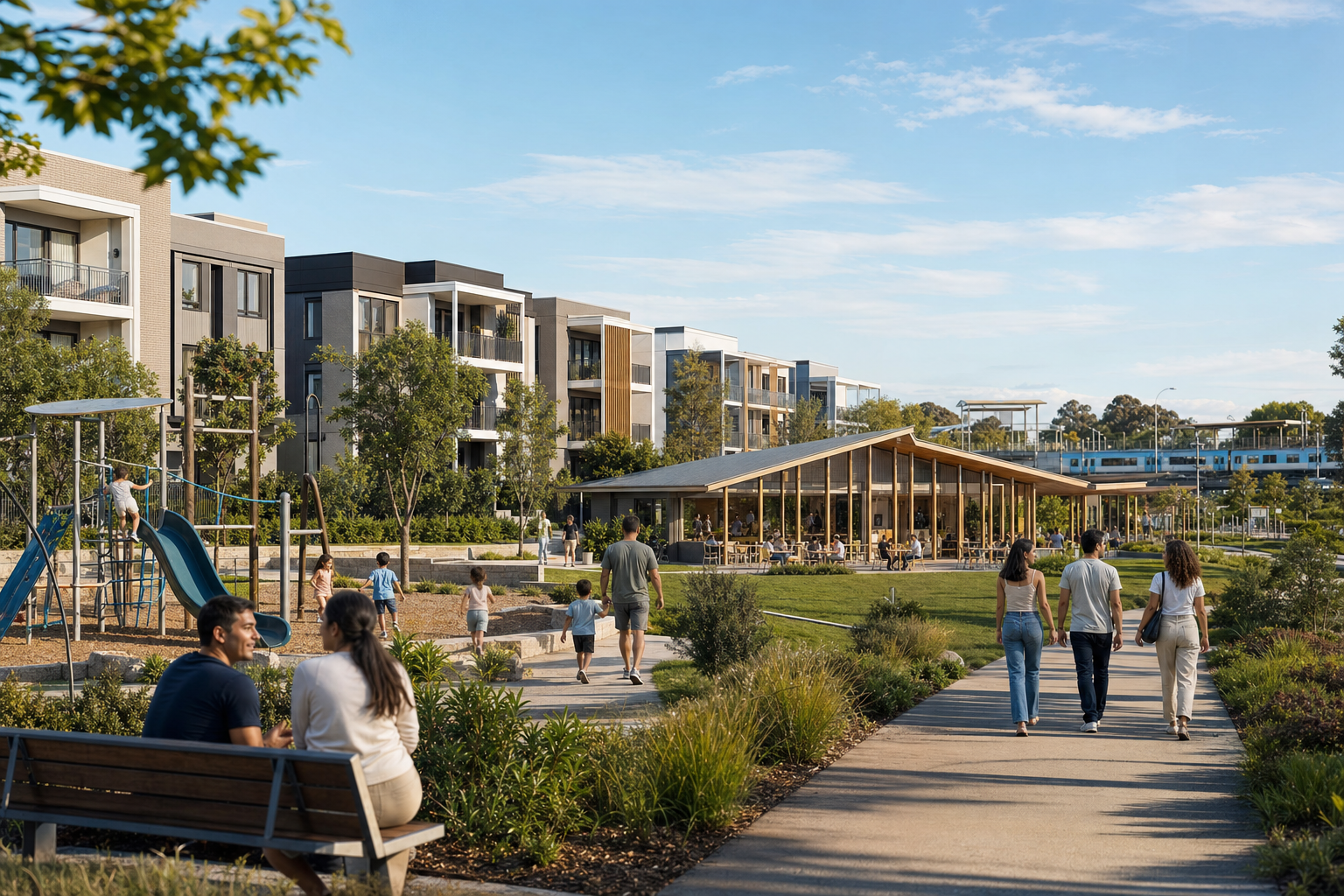
Choosing a master planned community means weighing the home against its location, amenities and future development. Here are the practical things to check when comparing communities and deciding which neighbourhood best suits your lifestyle and budget.
A masterplan can help you understand how homes, parks, roads and local services are intended to fit together as a neighbourhood develops.
However, every community is different, and the features that appeal to one household may not suit another.
Our guide to what makes master planned communities attractive explains how these developments are designed. This article focuses on the next step: comparing communities before deciding where to buy.
What matters most to your household?
Start with your household's needs and the lifestyle you want your new neighbourhood to support.
Think about your preferred home type, budget and the places you regularly visit. Your commute, schools, family and friends, parks, shops, healthcare and public transport may all influence which location works best.
Decide which features are essential and where you could compromise.
Someone working from home may value extra space and nearby walking trails. A household travelling into the city every day might place more importance on public transport and journey times.
Write down your priorities before visiting communities. Using the same criteria for each location will make your comparisons more useful.
Does the location work for your everyday routine?
The location of a community can affect how conveniently you reach the places you need.
Look beyond the distance shown on a map. Consider how you would travel to work, school, shops and other regular destinations.
Where possible, test those journeys at the times you would normally make them. Check public transport timetables, walking and cycling routes, and the availability of nearby services.
If school access is important, confirm catchment information with the relevant education authority rather than relying solely on promotional material.
Different communities offer different settings.
Williams Landing in Victoria is a 275-hectare mixed-use development incorporating residential neighbourhoods, offices, retail, parklands and a major transport hub.
Bushmead in Western Australia offers a different environment, with more than two-thirds of the community, approximately 185 hectares, retained as natural bushland.
Both demonstrate how a masterplan can respond to its location, but the experience of living in each community will be different.
The important question is which setting best supports your household's needs.
What amenities are available now and what is planned?
Master planned communities are often developed in stages.
A park, school, shopping centre or transport connection shown on a masterplan may already be operating, under construction or planned for future delivery.
Before purchasing, ask for the latest masterplan and find out which facilities are available today.
For proposed amenities, check who is responsible for delivery and whether planning approvals, funding or construction timelines have been confirmed.
Some infrastructure may be delivered by the developer, while schools, public transport and other services can depend on government agencies or private operators.
Also consider what ongoing construction activity could mean for the area surrounding your home as later stages progress.
At Flourish in South Maclean, Queensland, more than 30% of the site is dedicated to green space, including parklands, walking trails, retained bushland and the Flagstone Creek corridor.
The community's Endeavour Park opened in June 2026, providing more than 5,000 square metres of recreation and open space.
While the park is now available, other parts of Flourish continue to develop. Buyers should check the latest project information to understand what has been completed and what remains planned.
Understanding these differences helps you assess a community as it exists today, rather than relying on features that may be delivered later.
What should you compare when choosing a home or lot?
Once you are comfortable with the wider community, consider whether the property itself meets your needs.
For residential land or a house-and-land package, look at lot size, frontage, orientation, site conditions and any building or design requirements.
Consider whether the block can accommodate the home you want, including parking, living areas and outdoor space.
A builder familiar with the community may be able to help you understand which designs suit particular lots. You should also obtain appropriate independent advice about site conditions, building costs and contractual requirements.
For completed homes and townhomes, consider layout, storage, privacy, natural light, accessibility and outdoor space.
Apartment buyers may place more importance on balconies, lifts, parking, shared facilities, internal storage and proximity to local services.
At Glenside in South Australia, Bloom provides an example of apartment living designed around the needs of downsizers.
The completed development comprises 119 apartments designed for over-55s seeking a lower-maintenance home with access to shared amenities and nearby services. Bloom is now sold out, but it demonstrates how housing design can respond to a particular stage of life.
Whatever property type you prefer, consider how well the home will work for your household now and whether it could continue to meet your needs as circumstances change.
Have you considered the full cost of living in the community?
The purchase price is an important starting point, but it may not represent the full cost of buying and maintaining a home.
Depending on the property, you may need to budget for building and site works, government duties and charges, council rates, insurance and ongoing maintenance.
Apartments and some other properties may also involve strata or owners corporation fees.
Transport costs are worth considering too, particularly if the location means driving longer distances to work, school or everyday services.
Ask for current information about costs that apply to the property you are considering. A conveyancer, solicitor, financial adviser or other qualified professional can help you assess relevant obligations before purchasing.
Comparing costs alongside location and lifestyle will give you a more complete picture of what each option involves.
How can you assess a developer's experience?
A masterplan shows what a developer intends to create. Completed developments can help you assess what it has already delivered.
If possible, visit an established community developed by the same company.
Look at the condition of parks, landscaping, roads and shared spaces. Consider how the neighbourhood has developed since residents first moved in.
Ask how the developer communicates with buyers and residents, particularly when construction stages or future plans change.
You may also want to know whether the developer supports local community organisations, resident events or other initiatives that bring people together.
Cedar Woods, for example, has operated its Community Grants Program since 2009, supporting more than 150 community groups across Australia.
Customer experiences can provide another perspective.
Read recent testimonials and independent reviews, including Google reviews where available. Look for recurring themes rather than relying on a single unusually positive or negative experience.
A developer's completed projects, communication practices and ongoing involvement in its communities can provide useful context when assessing future developments.
How should you compare your final options?
Once you have narrowed down your shortlist, return to the priorities you identified at the beginning.
Use the same questions to assess each community:
- Location: Does it work for your commute, regular activities and access to essential services?
- Amenities: Which facilities are available now, and which are planned or under construction?
- Housing: Does the available home or lot suit your household's needs, budget and preferred lifestyle?
- Costs: Have you considered the upfront and ongoing expenses associated with the property?
- Developer experience: Can you see evidence of completed communities, consistent communication and support for residents?
Visit your preferred communities again if possible, ideally at a different time of day.
Speak with the local sales teams about available properties, current development stages and anything in the masterplan that is important to your decision.
Confirm significant details independently, particularly where they involve future infrastructure, school access, property costs or contractual obligations.
The aim is to choose a home and neighbourhood that suit your needs, with a clear understanding of what is available today and how the surrounding community may change.
Explore Cedar Woods communities across Australia to compare locations, housing options and project information. You can also contact the relevant sales team for more information about an individual community.
This article provides general information only. Property availability, masterplans, development stages and proposed amenities may change. Buyers should undertake their own research and obtain independent professional advice where appropriate before purchasing.